01

Research

Reclaiming losses.
Rethinking efficiency.

Dipul’s research asks a practical systems question: under real constraints, what happens when engineering prioritizes recovering unavoidable losses before demanding more primary input?

Peer-reviewed journal · January 2026

IJEDR · VOL. 14 / ISSUE 1
DOI 10.31224/6283

Dipul’s Loss-Reclamation Priority Theory (LRPT)

A Constraint-Aware Optimization Framework for Energy Systems

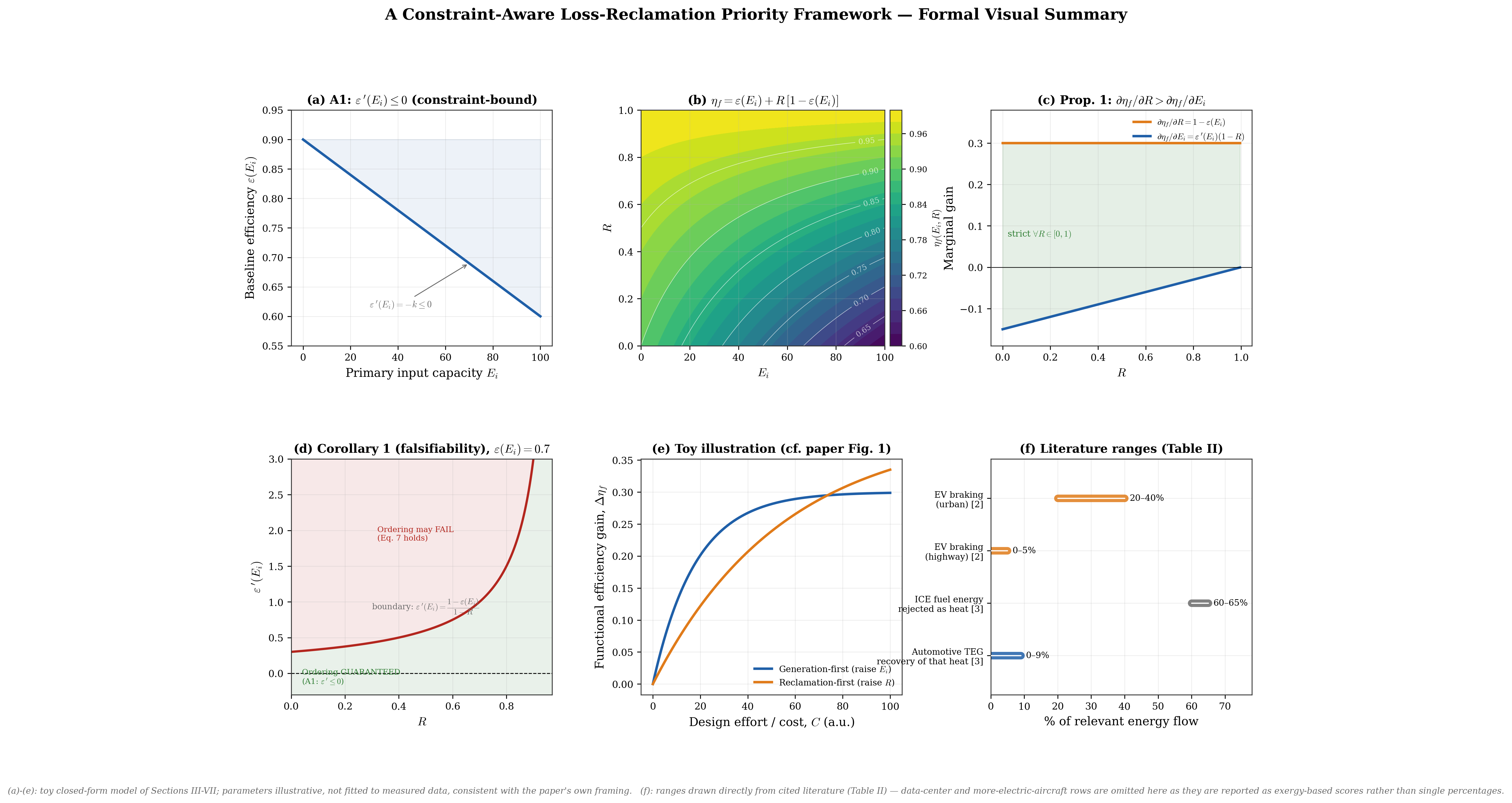
LRPT is a systems-level optimization doctrine asserting that, under realistic constraints of mass, cost, volume, complexity, and reliability, reclaiming and reusing unavoidable energy losses can yield greater net functional-efficiency gains than increasing primary energy input.

The framework establishes a formal inequality through classical energy balance, constraint-aware marginal analysis, and exergy reasoning. It is validated across electric vehicles, where the stated recovery gain is 15–30%; internal-combustion vehicles, 20–40%; aircraft; and data centers, with the CV recording 15–40%.

LRPT introduces no new physical laws. It is presented as a prescriptive optimization doctrine: original in formulation, falsifiable, and suitable for early-stage engineering design.

Six-panel formal visual summary of the constraint-aware Loss-Reclamation Priority framework
Formal LRPT visual summary · Constraint bound, functional efficiency, marginal gain, falsifiability, effort comparison, and literature ranges · Open full resolution

Research paper · February 27, 2026

GREEN AI
CONSTRAINT-AWARE COMPUTE

Dipul’s Green AI Reclamation Framework (GARF)

A Practical Way to Handle Energy Limits in AI Training and Inference

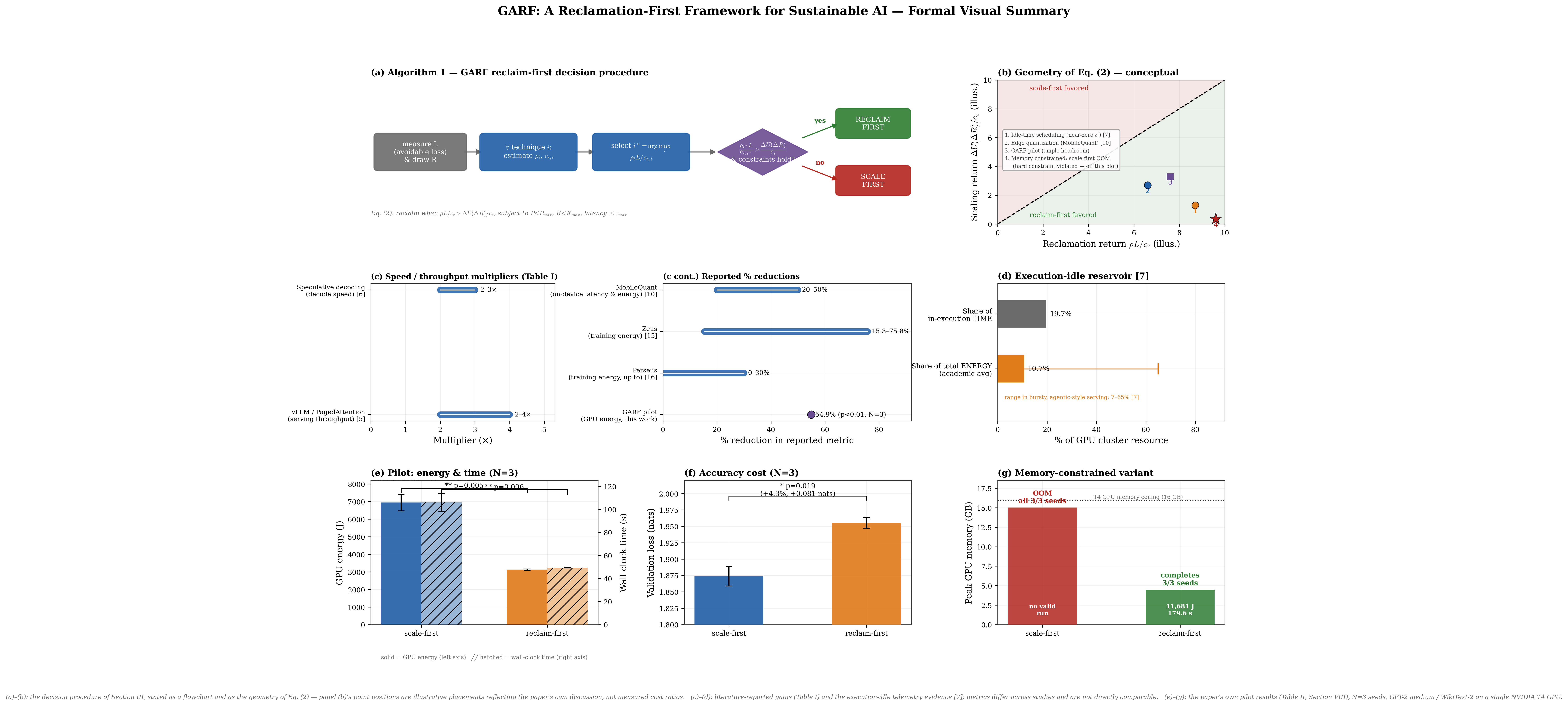
GARF argues that when AI systems face tight power, equipment, carbon, financial, and speed constraints, recovering wasted compute can provide more practical improvement than simply adding hardware or larger models.

The framework focuses on idle GPU time, unnecessary calculations, and over-parameterized models. Case studies spanning 2024–2026 in large-language-model training, data-center inference, and mobile devices are described as producing two to four times better efficiency results through reclamation approaches.

Formal visual summary of the Green AI Reclamation Framework with decision flow, efficiency evidence, energy, accuracy, and memory comparisons
Formal GARF visual summary · Reclaim-first decision procedure, reported gains, pilot energy and time, accuracy cost, and memory-constrained results · Open full resolution

Press & writing

Coverage and published perspectives

Collaborate

Research, creative work,
or a conversation worth having.